Read more at:
Microsoft has been one of the biggest tech companies for a very long time, but despite selling hardware like laptops, tablets, and (of course) Xbox consoles, it hasn’t found much success in the smartphone market. Between 2010 and 2015, Microsoft released a series of smartphones running its Windows Phone operating system. However, they never gained traction, especially compared to Apple’s iPhone or Google’s Android.
Back in 2015, BGR covered a former Microsoft engineer who discussed why the Windows Phone never really had a chance, mostly because of heavy competition and a lack of urgency on Microsoft’s part. Once the iPhone launched, smartphones became Apple’s top priority. At the same time, Android was becoming the second behemoth in the market and, with the help of Samsung, the only real rival to the iPhone.
Apple and Android’s dominance meant the deck was stacked against anyone trying to break through. If any company had the resources to succeed, it was Microsoft, but the company prioritized other projects over Windows Phone hardware and software development. Truly competing would have required Microsoft’s full attention, and the company was clearly uninterested in going all-in on mobile.
Microsoft made other mistakes with Windows Phones
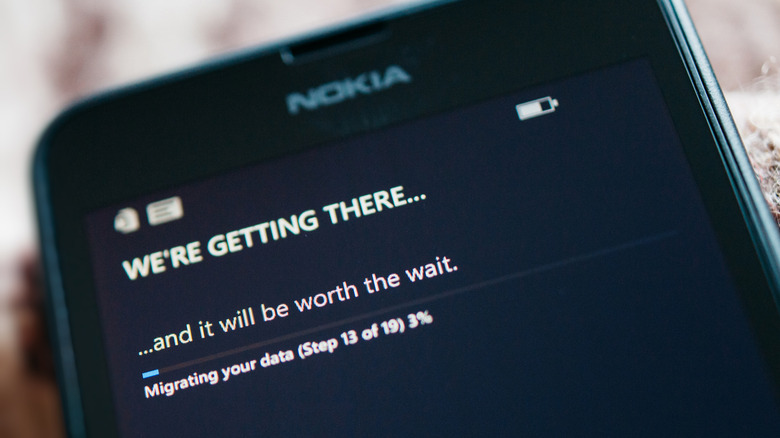
Setting aside the market conditions, Microsoft made some critical missteps with Windows Phone, one being Windows 8, which some critics at the time claimed had destroyed the most successful software franchise of all time. The operating system was modeled after mobile interfaces in an attempt to revitalize PCs by having them imitate the smartphone experience.
However, Windows 8 had the opposite effect. Since mobile UI is based around touchscreens, it doesn’t translate well to computers without them. It’s why Apple has different operating systems for different categories of device rather than attempting to apply a one-size-fits-all solution. Rather than boosting its PC business, the OS was so hated by users that it damaged the entire brand for a time. Through no fault of its own, the Windows Phone became associated with Windows 8’s failure.
The lack of a user base also meant developers were uninterested in making apps for Windows Phone. In contrast, Google-owned Android had access to the company’s many services like Gmail and YouTube, which Google pulled from Windows Phone in 2013. By 2017, even Bill Gates (then a member of the Microsoft board) and other Microsoft executives publicly admitted they had switched to Android over Windows’ struggling smartphone software.
In October 2017, Microsoft ended development on Windows 10 Mobile before fully ending support in January 2020. Although the era of the Windows Phone operating system is long over, Microsoft is returning to the smartphone hardware market with the Android-powered NexPhone, expected later in 2026.