Read more at:
Transitioning from fossil fuels to renewable energy sources is an essential part of combating man-made climate change. Energy sources like solar, wind, and hydropower projects are rapidly expanding, accounting for over 90% of new electricity capacity built across the globe in 2024, according to the International Renewable Energy Agency. That’s impressive, but it still falls short of international goals, especially as data centers drive up demand for gas and other fossil fuels. Regardless, increased investment in renewable energy projects is an important step, even if there’s a lot of work still to be done.
By their nature, the availability of renewable energy sources is dependent on location, so what type is most popular varies widely. Across the globe, hydropower accounts for the majority, at 52% percent of all renewable electricity generated as of 2023. To put that in perspective, the 4.4 million gigawatt hours (GWh) of power hydro produced is around the total amount the United States generated in total that same year. That includes fossil fuels and nuclear power, which isn’t 100% clean, but does not produce air pollution.
Wind is the most common renewable energy source in the United States
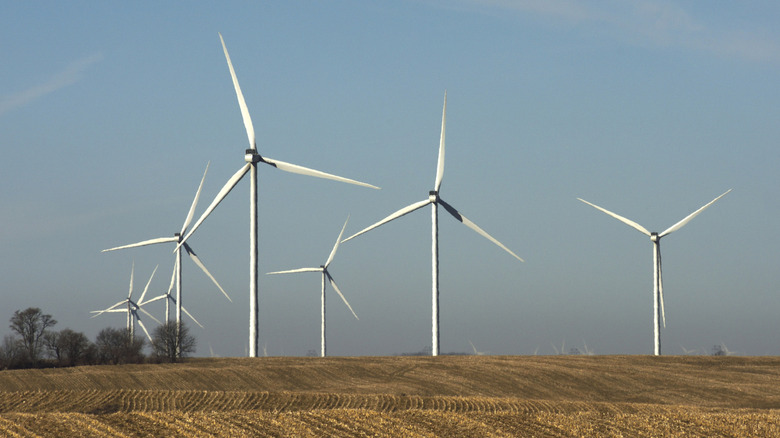
As of 2023, wind power accounts for about 10% of total electricity production in the U.S., and the five states with the most wind turbines includes Texas and Kansas. Wind’s dominance makes sense given how much wide open space is available across the middle of the country and the fact that wind is more efficient that solar power. The U.S. has taken steps to increase its offshore wind capabilities, though current projects are facing political roadblocks due to President Trump’s well-documented opposition to wind power.
The current administration has paid around $4 billion to offshore wind companies to prevent them from building new wind farms. Still, the U.S. was one of the world’s largest wind energy producers in 2025 at 20%, second only to China’s 35%. That said, America’s solar energy capabilities are rapidly increasing.
New projects coming online in 2026 and 2027 are expected to increase overall solar generation capacity by nearly 50% from 2025, with much of that coming from power plants in Texas. States that generated more electricity from solar than coal or gas include Maine and Utah, as of May 2026. Hydropower makes up a smaller amount of electricity production in the U.S. at 5% in 2025, much of which comes from western states.
China accounts for most of the world’s clean energy growth

In 2023, worldwide clean energy production reached 30% of total electricity output for the first time. Much of that growth came from China, which has made huge investments in renewable energy projects including massive solar, wind, and hydropower plants. Renewables accounted for 42% of China’s power generation in 2025, 13% of which came from hydro. The country has also been leading in green energy innovation such as a flying wind turbine that, if scalable, could harness power from elevated wind sources.
Despite these advancements, China still gets 58% of its electricity — over 6,000 terawatt hours in 2025 — from fossil fuels. China actually uses more coal than the rest of the world combined. While the country’s overall coal consumption is stagnating, global use reached a record high in 2025 and is expected to rise in the next couple of years due to ongoing conflicts in the Middle East.
Worldwide solar, wind, and hydropower capabilities are growing rapidly alongside demand. While electricity generation is rising, that means little if storage capacity and transmission infrastructure doesn’t grow with it, as evidenced by U.K. wind farms making too much energy. While there are some promising developments when it comes to renewable energy production and use, we have a long way to go on phasing out fossil fuels.