Read more at:
NAT stands for “Network Address Translation.” It refers to how your router translates your devices’ private local IP addresses into a single public IP address, which ultimately lets you connect to the internet. There are usually three main types for gaming and home networking: Open NAT, Moderate NAT, and Strict NAT; your device and router will fall into one of those categories, which may restrict you from some functions.
With Open NAT (Type 1 or Type A), incoming connections on specific ports are allowed to reach your device unhindered (usually via UPnP or explicit Port Forwarding). Moderate NAT (Type 2 or Type B) will have some restrictions, but is generally accessible enough to play online and connect to other players with the same NAT type, or those who are in Open NAT. Strict NAT (Type 3 or Type C) is the most restrictive, as it significantly limits online traffic through your router — you can essentially only connect reliably to others with Open NAT. If you have access to your router, changing settings like enabling UPnP, configuring port forwarding, or enabling Bridge Mode to resolve Double NAT can often fix NAT errors.
NAT type errors can block connection requests

NAT type errors can be a frustrating experience. Depending on the NAT type, you might not be able to host a session freely or connect to anyone seamlessly if your router is completely blocking it. You could be at school, simply trying to pass time playing Minecraft during breaks. But if the school’s network enforces Strict NAT, it may prevent students from hosting or joining peer-to-peer multiplayer sessions. Without access to the school’s router administrative settings, options will be limited.
However, if you do have access to your router, fixing a NAT error is often much simpler. Log into your router’s admin page, then enable UPnP in your network settings. From there, reboot both your router and connecting devices. If that doesn’t fix it, you’ll need to take additional steps, like setting a static IP (or DHCP reservation) on the connecting device and reopening the admin page to configure a Port Forwarding rule routing necessary traffic. Double NAT setups may require enabling Bridge Mode.
How to get Open NAT without router access
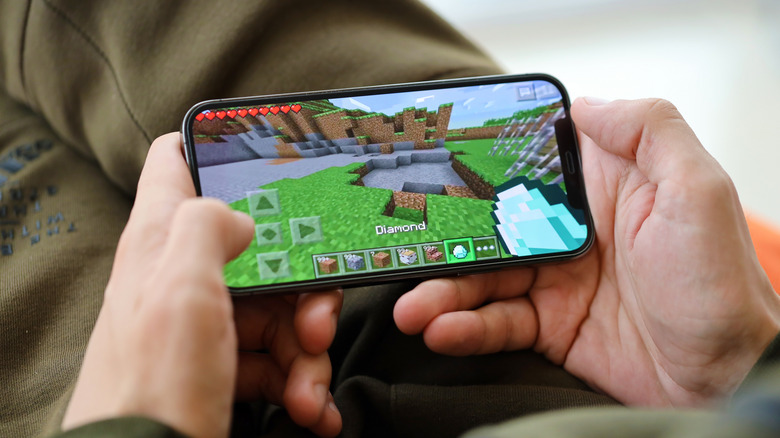
You can try to bypass local network restrictions if you’re willing to use another connection, like a VPN or your mobile data. But these solutions aren’t perfect. For one, a VPN rarely gives you Open NAT access without a workaround; instead, you’ll get Type 2 or Type 3. As previously mentioned, Type 2 lets you connect with Moderate or Open NAT users; Type 3 limits you almost exclusively to connecting with Open NAT hosts.
A safe fix is to turn on hotspot sharing, then pair that with a VPN that supports port forwarding or has a dedicated static IP. If this is enough to replace your home internet, it should be enough to replace a school’s Wi-Fi. That said, the quality will depend on what you’re paying for in terms of connectivity — like if you have access to 5G or premium LTE. Plus, your data cap and your device’s battery will be affected, since a mobile hotspot can be a significant source of battery drain. Another downside, similar to using a VPN, is that mobile carriers use Carrier-Grade NAT (CGNAT), which mostly defaults to strict-level status. You’ll then need to use port forwarding via a VPN to bypass the NAT restrictions.
Keep in mind that using your mobile data while playing Minecraft will consume around 40-300MB per hour, with the amount increasing if you’re hosting the game or playing on modified servers. For other games, it’s similar: Overwatch 2 can be around 150MB per hour, and Genshin Impact is around 60MB. Just ensure you have a data plan that supports at least 5GB to 10GB or more (most use 15-20GB a month) if you’re doing this five days a week, not including updates.