Read more at:
BlackBerry, once known for its domination in the early eras of the smartphone market, was completely decimated by the flood of iPhones and Android devices that followed suit. Now, the company isn’t even in the smartphone game anymore. In fact, it’s effectively pulled out of all consumer products entirely, opting to move into cybersecurity and still supplying the real-time operating system, QNX, for various industries. However, getting to this point has been rocky, to say the least.
Originally a pager company, BlackBerry found success in the cell phone market with the Pearl 8100. Other models, like the Bold and Curve, would see further adoption, offering free messaging services over wireless networks through BlackBerry Messenger and the eventual inclusion of apps like WhatsApp. Its first touchscreen competitor to the iPhone in 2008 was the BlackBerry Storm, one of the weirdest devices BlackBerry ever made. As such, it was not the best reviewed.
In 2010, BlackBerry peaked at 21 million users in the US, but this fell to 9 million by the time 2012 rolled around. It wasn’t all doom and gloom, as the company still retained a total of 79 million worldwide, with Indonesia remaining loyal to the brand. In 2014, it even launched a phone in the region, the Z3, which remained exclusive until July 2014, when it launched in India. With this, BlackBerry tried to push back and remain a healthy third competitor, but it couldn’t stop the tide.
BlackBerry pivoted from phones
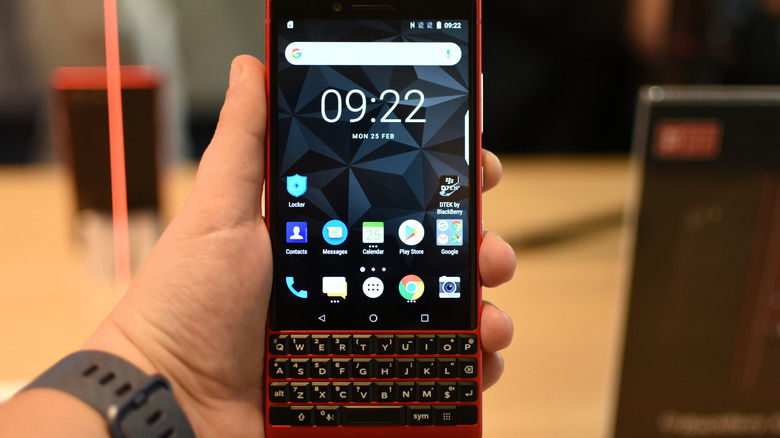
After the launch of BlackBerry 10, its then-new operating system, and a new line of devices that didn’t bring much fortune, like the BlackBerry Playbook, Android and iOS were simply better featured and supported by developers. In April 2011, Apple surpassed BlackBerry for the first time in terms of users. Then it just never stopped, with the company being washed out entirely. Comscore reported in 2016 that only 0.8% of users in the US were using BlackBerry. At the time, iOS had 43.9% of the market.
By the end of 2013, BlackBerry appointed its new CEO, John Chen. Under his direction, the company began to pull back from the phone business, ditching its own operating system in favor of Android. This move didn’t last long. After the BlackBerry KEY2, the company moved into the business of Internet of Things (IoT) and cybersecurity.
Under Chen’s leadership, BlackBerry has successfully pivoted into far more than it originally was. Having purchased QNX Software Systems in 2010, BlackBerry began to lean on it for more embedded tech solutions. One area that BlackBerry has completely dominated is the automotive industry, where QNX is used in 24 of the 25 electric vehicle makers. It’s installed in nearly 300 million cars, and over 270 different makes and models. A partial reason for its success is that it acts as a baseline with development opportunities. BlackBerry actually powers Apple CarPlay and it also supports Android Auto.
Many people drive a BlackBerry product now
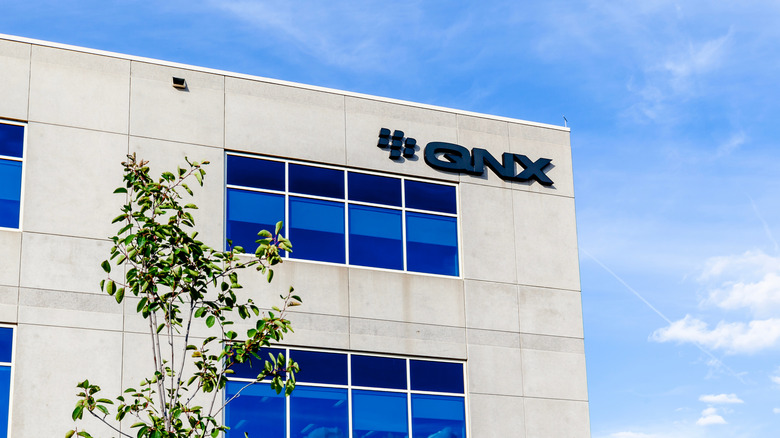
QNX isn’t a small thing. In fact, it has become a key piece of software for some automakers. BMW announced in January that it would be using QNX. BlackBerry has already begun shifting its focus to robotics as well. On its website, it advertises humanoid robots on factory floors, as well as surgical and painting robots.
As we mentioned above, BlackBerry Messenger was a key success factor at its peak. Well, the company never stopped developing a communications platform, and now supplies Secure Communications, a security-focused solution used by governments worldwide. BlackBerry promotes its success stories with Secure Communications, including clients like the Red Cross, the British police forces, the Canadian parliament, and even hospitals.
Apple has scrapped its car and, with it, its car operating system plans. However, Google has clearly seen its chance. Predictions anticipate that by 2028, over 100 million cars will be installed with its Automotive OS – not the same as Android Auto. In the meantime, however, BlackBerry might not be in everyone’s pockets anymore, but drivers with electric vehicles all over the world are definitely using the company’s products.