Read more at:
Smartphones can do amazing things, especially given they’re usually not much bigger than a deck of playing cards. But consumers often face two key friction points with them: battery life and charging times. Phone brands popular in the West have made steady improvements to their smartphone battery and charging technologies over time, but Chinese competitors have taken advantage of space-efficient (but costly) silicon-carbon batteries and high-wattage charging that can go from 0% to 50% battery in less than 10 minutes. Why do we only get up to 60-watt charging on Galaxy phones and iPhones when Chinese Oppo phones can handle up to 100 watts of input?
For over a decade, Chinese firms have researched and developed charging methods that reduce prolonged thermal stress on batteries and charging systems. Oppo, for one, builds proprietary wall adapters that limit smartphones’ exposure to excess heat. Similarly, Xiaomi has adopted techniques like simultaneous charging to dual-cell batteries to better manage current and voltage. Both companies’ charging improvement strategies revolve around using hardware that diffuses sustained heat across battery cells.
Across the Pacific, the story has differed. After chip vendor Qualcomm drove fast charging innovation with the Quick Charge protocol back when USB charging passed along less than 7.5 watts, Android manufacturers like Samsung, LG, and Motorola started including Quick Charge adapters with their mobiles devices. While the Quick Charge 5+ protocol published in 2025 can deliver up to 140 watts — and is cross-compatible with the modern USB Power Delivery (PD) protocol — only one Rich Spectrum-brand wall adapter and one Weltrend controller component have been certified to support it. Although many modern phones and adapters can use some version of Quick Charge technology, it’s not a headline feature on popular Western phone brands, whose charging implementations generally don’t support the high wattages offered by Chinese competitors.
Some context that (possibly) explains the charging speed discrepancy
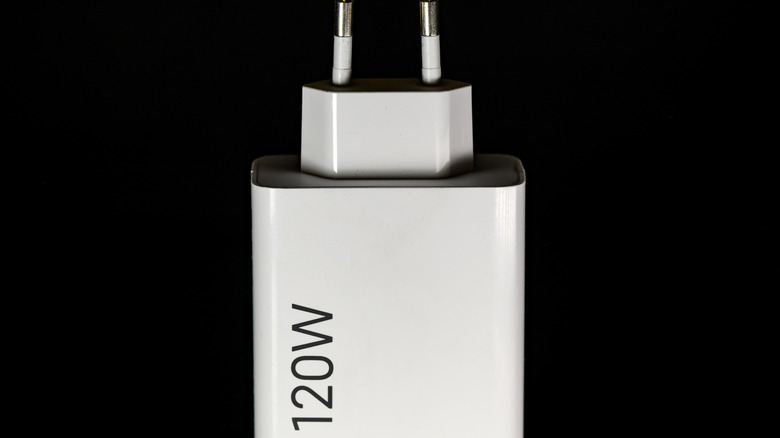
It’s not like Apple, Google, or Samsung can’t figure out their own ways of implementing faster charging, but when it comes to why they haven’t, there’s no quick or easy answer. In a writeup for Pocket-lint, author Roger Fingas brings up an intuitive point: when Chinese companies devote money and R&D as they have to create their own proprietary standards, those technologies become embedded in local manufacturing chains. In this way, upfront investments have led to big dividends and reduced costs over time. Meanwhile, Western companies have focused on emphasizing other areas of the smartphone experience, such as beefy cameras and AI features, so they’re more or less stuck with their existing engineering and component designs — especially now that AI-driven economic swings are putting major cost pressures on components, namely RAM, leaving less room for costly charging-related R&D.
Western OEMs may also be motivated to reduce component risk and failure because customers have had grievances and reservations about how major smartphone brands balance product safety and longevity. Samsung’s infamous Galaxy Note 7, for instance, was subjected to a worldwide recall and replacement program because poor insulation and insufficient electrode clearance were contributing to battery explosions. On the other hand, in Apple’s dramatic iPhone “Batterygate” saga, the company fielded complaints and lawsuits over how it managed iPhone battery health by throttling performance. So, short of a sudden reshuffling of priorities, we may be waiting some time before we see Western phone brands take on faster charging at the rates that Chinese manufacturers have been achieving.