Read more at:
If you are planning to buy a top-rated gaming router or are just exploring the idea of owning one, you must have wondered whether they are actually useful. Besides the fancier design and RGB lighting on some models, do gaming routers really improve the gaming experience compared to a regular, standard Wi-Fi router? The answer comes down to the router you presently own, the gains you are hoping for, and your current home network setup.
For many of you, a gaming router may not be the best upgrade or deliver the kind of performance or latency improvements you might be hoping for. That’s because you are still on a wireless network. Despite performance-oriented features like Quality of Service (QoS) and beamforming, connecting to a gaming router wirelessly may still introduce some lag or latency, and it can’t match the experience delivered by a wired connection. When it comes to gaming, Ethernet is the better choice over Wi-Fi.
Besides, there are several other factors at play, such as the internet plan, including the download and upload speeds, the number of devices on the network, and the distance between the router and the gaming device. Unless you optimize these, you won’t notice much difference after upgrading to a gaming router from a standard Wi-Fi router. But gaming routers do have some benefits, from performance to faster downloads.
Gaming routers prioritize performance
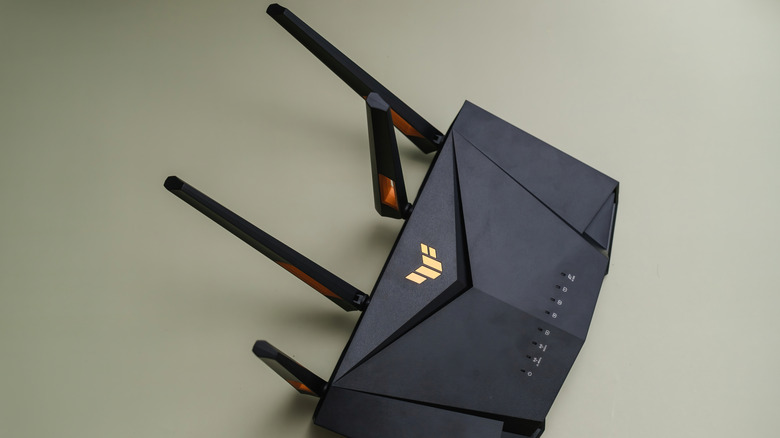
Gaming routers are undoubtedly built for performance. They include features like Quality of Service (QoS) and beamforming, along with support for multiple bands. QoS essentially allows you to prioritize specific devices or tasks. For instance, with a gaming router, you can prioritize gaming traffic over downloads, scheduled backups, and streaming. Beamforming, on the other hand, improves connectivity and fixes dead zones by directing Wi-Fi signals toward connected devices instead of projecting them evenly in all directions. With tri-band routers, you can dedicate the additional band to gaming, reducing interference from other devices.
Gaming routers also come with faster processors and extra RAM to handle more operations and devices simultaneously without slowing down. If your home has too many devices, those could be overloading the network, and a gaming router might be a smart choice. They are also easier to customize. Unlike regular Wi-Fi routers where the admin panel feels like something best left untouched, the one on gaming routers is more user-friendly. For example, you often have drag-and-drop controls making advanced settings easier to configure.
Gaming routers are overkill for most
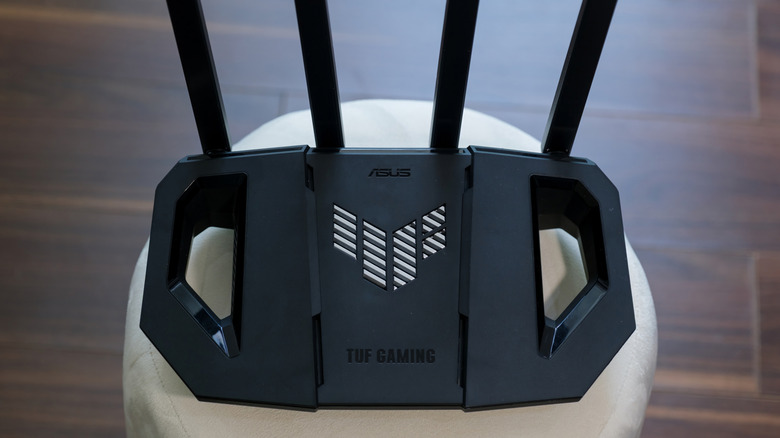
When it comes to actual performance gains on a gaming router, the changes may not be as noticeable as many initially hope for. In real-world tests, the improvements are generally much smaller. That’s why gaming routers are sometimes referred to as fancier versions of regular routers.
There are two problems with gaming routers, or more precisely, the way they are marketed. Most gaming routers don’t generally offer exclusive features. The features may be more refined and easier to configure, but they are present on most high-end consumer routers as well. For instance, you will find QoS on most standard Wi-Fi routers. Of course, it may not be as customizable, but the feature is still present and works much the same way. Second, gaming routers won’t instantly improve the gaming experience, as long as your original router isn’t the bottleneck. In other words, if your original router is already fast and stable, you won’t notice an instant upgrade. The real factor is often the bandwidth limitation of your internet plan, which even a gaming router can’t overcome.
A wired connection over a standard router will usually be better than a wireless one over a gaming router. That’s because Ethernet offers lower latency, more stable connectivity, and less interference. Even moving the gaming console or PC closer to the router has a major impact, alongside optimal router placement.
Sometimes, simply optimizing the current setup does the trick, while for seasoned gamers, a gaming router may be of value depending on individual requirements and the existing setup.