Read more at:
If you’re browsing gaming graphics cards, you don’t have that many choices since Nvidia and AMD are pretty much holding a duopoly. Sure, there are several disadvantages of going for AMD in favor of Nvidia, mainly in terms of tech like ray tracing and driver support, but the price is something that is bound to win you over if you’re stripped for cash. So, what are you getting exactly? Who owns AMD?
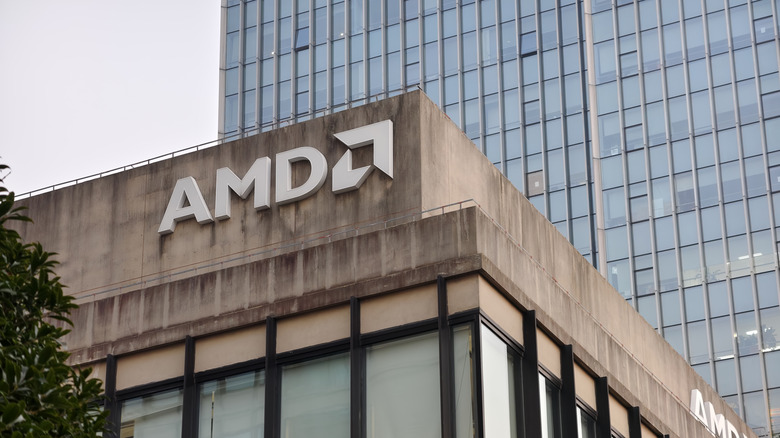
Just like Nvidia, Advanced Micro Devices (more commonly known as AMD) is a publicly traded company on NASDAQ, so you can expect the full ownership to lean on the colorful. The largest individual shareholder is Dr. Lisa T. Su, the CEO of the company, who owns over 3.8 million shares. Right behind is Mark Papermaster, the CTO, and Jack M. Huynh, the senior vice president. Yet, the majority of the shares, over 72%, to be exact, are owned by varied institutional investors. Vanguard Group Inc. holds nearly 10% of the shares (its portfolio also includes a 6% chunk of Nvidia), followed closely by the famed BlackRock and the State Street Investment Management.
AMD is currently headquartered in Santa Clara, California, and has been in the computer business since 1969. AMD didn’t really hit its stride until the late ’90s with the revolutionary Athlon processor, and didn’t become what it is today until 2006, when it acquired ATI Technologies. AMD then released the Radeon GPU as a direct answer to Nvidia’s famed GeForce line of products, starting the arms race between these two companies that rages on to this day.
Which other companies are these people connected to?
Do individual shareholders have their fingers in any other companies? For starters, AMD’s CEO, Dr. Lisa Su, had a hell of a career. Her stint at IBM lasted 12 years, highlights of which include working on copper interconnects and serving as a technical assistant to the CEO. Su later joined AMD, and within two years, she became the CEO. Su is part of the U.S. Semiconductor Industry Association board of directors, along with Nvidia’s Tim Teter and Intel’s Lip-Bu Tan, among others.
The CTO, Mark Papermaster, had a similar track record and has worked for Cisco, Apple, and IBM over the years. Currently, Papermaster doesn’t hold shares in any other companies. However, he serves as the Vice Chair of the U.S. Department of Commerce Industrial Advisory Committee.
It’s a similar thing with the senior vice president Jack M. Huynh. Though he’s one of the majority individual AMD shareholders, he doesn’t have any other shares in his portfolio. One could argue that Huynh is most committed to AMD, having worked for the company since 1998, fulfilling a series of important roles during his tenure. Before serving as a corporate vice president, he held a position as the general manager of AMD’s mobile division.
Why are AMD products cheaper?
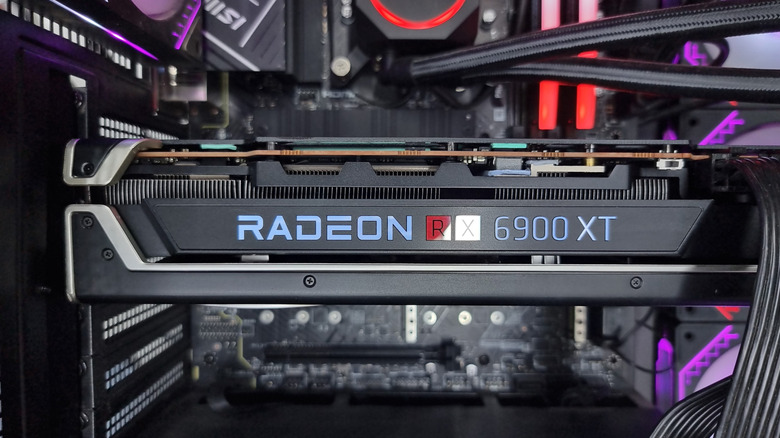
Along with BlackRock and Vanguard holding significant shares in both companies, the similarities don’t end there. When you look at where Nvidia GPUs are made, the key location is Taiwan. That applies to its main competitor as well, since AMD manufactures its processors in the same place. In fact, TSMC, the leader in semiconductor manufacturing, is behind both chips, and the only difference is, of course, the design.
Thus, the reason why AMD is cheaper has nothing to do with where the products are made. Rather, the company has positioned itself as a more affordable alternative to Nvidia. Performance-wise, they’re quite close, at least in the mid-range and lower-tier graphics cards. Things fall apart somewhat when you move higher up the ranks; think beefy GPUs and processors. This is where Nvidia still reigns supreme and simply offers more performance, despite its higher price point. You have to pay top dollar for all those extra frames, after all. But that doesn’t make AMD any less good. The best graphics card is the one you can afford and use. Can you cash out $4,000 for the top-of-the-line Nvidia?