Read more at:
If you’re a gamer, odds are you’ve heard of Razer, a brand that’s become almost synonymous with gaming peripherals since its founding back in 2005. Back then, gaming was a much more niche market, and specialty gaming peripherals barely existed as a hardware category. In the intervening decades, the market has exploded, and while some underrated brands have risen to compete with Razer, the company has maintained its position near the forefront, now partnering outside the hardware sphere with luxury brands like Dolce and Gabbana and Lamborghini. It’s even begun to slide into the productivity space, and at least one doctor uses Razer products to help treat his patients.
As the brand has evolved, so too has its ownership. Originally founded by Min-Liang Tan and Robert Krakoff, the company has gone public and subsequently returned to private ownership. Tan has retained an ownership stake in the company throughout its lifespan, and currently retains a 39% share. The remainder of the company is currently held by Singaporean businessman and early investor Lim Kaling, with 29%, and the private‑equity firm CVC Capital Partners, which controls 32% of the company.
Who is the parent company of Razer?
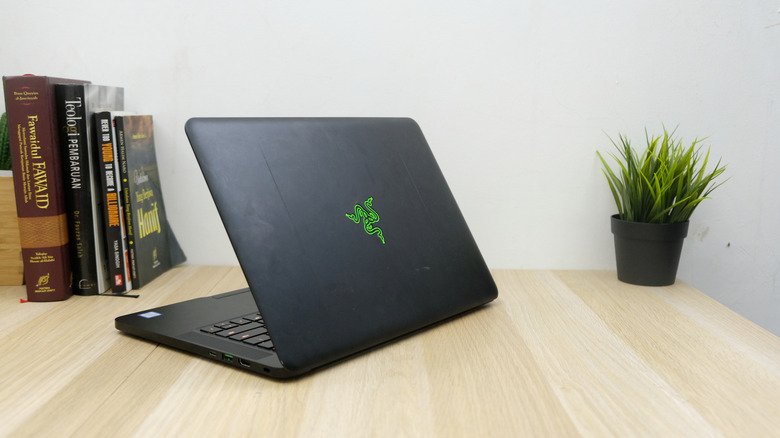
With its ownership split between a private equity firm and two individuals, Razer doesn’t have a parent company as such. That said, it is a truly global company, with headquarters in Singapore and Irvine, California, regional headquarters in Hamburg and Shanghai, and a total of 19 offices worldwide. Razer products are primarily manufactured in China, though the company does have production facilities in Singapore and elsewhere in Southeast Asia.
The brand’s name is actually the result of a misunderstanding. It doesn’t refer to “someone who razes” but is rather a misspelling of razor. The story goes that company cofounder Robert Krakoff cut himself shaving one day and was inspired to name his company after the offending implement, but Tan failed to run spellcheck on the incorporation documents before they were submitted, and the erroneous “E” became a part of gaming peripheral history. The vivid green, three-headed snake logo is derived from the idea that Razer products, many of which are named after venomous snakes, “eat competitors’ products for lunch.”