Read more at:
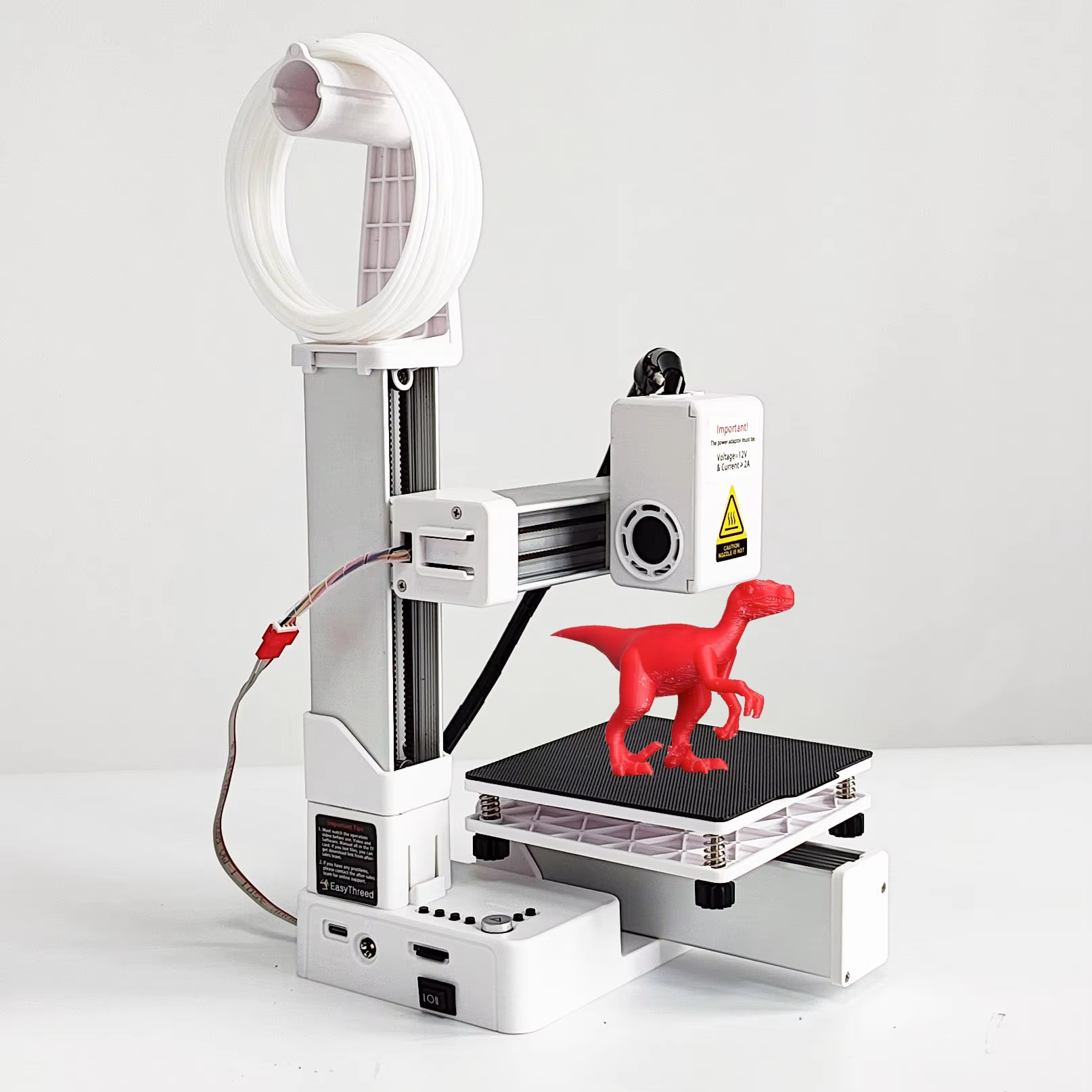
There’s always something practical missing from a laptop that manufacturers can’t account for in such a small form factor. Plenty of laptop users are primed for this and often buy accessories to improve performance, ergonomics, privacy, and cleanliness. But when a user also has a 3D printer around, it’s often cheaper and a great excuse to start a handful of new projects, because nothing feels better than making something that works.
Take the cooling laptop stand that’s in this article, for example. It used less than 500g of PLA filament and needs two 80-millimeter fans. A sturdy laptop stand with a single cooling fan and good reviews is around $35, whereas 1KG of PLA filament and two 80-millimeter fans cost around $27. The 3D print is also considerably sturdier, has two fans to spread heat distribution, and leaves users with a spare 500g of filament to play with.
Being able to print functional parts to enhance the ergonomics and performance of a laptop on demand is a game-changer, with many designs being available for use on Thingiverse and compatible with multiple types of filament. These cool printer projects focus on physical ways to upgrade a laptop through cooling and security, suitable for any kind of setup.
Portable laptop cooling stand
Cooling performance can make or break a high-powered laptop aimed at gaming or video editing, but this portable laptop cooling stand is a practical solution for even the best gaming laptops. This build is designed to house two 80-millimeter fans to force airflow directly against the underside of the chassis, which is where air intake vents are on most laptop models. Even if there are no vents viable, like the vents built into MacBook Pro and Air hinges, users are still cooling the hottest part of the laptop, which is essential for pushing laptop clock speeds for better performance during high and consistent loads. The design itself is quite simple yet tough, needing just three main parts for the frame alongside a couple of coverings for the joints.
There are two different side stand options to suit most laptops: One with a solid finish for a cleaner look or a portable version featuring grip holes for easier transport and feeding cables through. Assembly is fairly simple — the fans can be secured with their original screws, and the internal cables are tucked into a dedicated slot before being sealed with a lid. This will take around 456g of filament, with both fans costing near $15. It measures 300 millimeters in width and 265 millimeters in depth, providing plenty of space for 15-inch to 17-inch devices providing you’re okay with the support only being at the centre of the laptop base.
Webcam cover
With growing concerns over Wi-Fi security and spying on networks, it’s clear that digital privacy needs to be at the forefront of everyone’s mind when using internet-enabled devices. Hardware and software can be compromised, but a 3D-printed webcam cover can’t. This physical laptop webcam cover has a slim profile and a slide design made to fit when a laptop is open and shut, providing the rubber feet protecting the laptop screen from the keyboard are taller.
This print is extremely small and fast, designed to be printed at a 0.16 resolution with 25% infill. These specifications provide enough detail for the sliding mechanism to operate smoothly, making for a quick weekend 3D project. It’s a more elegant design than a bit of tape or a sticker; double-sided tape will be needed to stick this cover around the webcam casing.
Using a neutral-colored filament like gray or black PLA is going to be best to blend in with laptop designs. This project won’t require any rafts or supports either, making this an easy print-in-place project. This laptop print is the no-brainer for securing the privacy of employees, colleagues, friends, and family. It won’t get in the way and is a simple fix for a potentially serious problem.
Under-desk laptop docking station
Reclaiming desk space is a challenge for many, especially for those who use a laptop as a desktop by attaching monitors, a keyboard, and a mouse. There’s plenty of gadgets to help people work from home, but this under-desk laptop docking station is a clever way to hide USB hubs, power supplies, cabling, and, of course, a laptop bracket. Providing a user’s laptop thickness doesn’t exceed 25 millimeters, this design is compatible with any laptop, even though it was originally designed for a 15.6-inch Lenovo P1. The idea here is to have everything mounted securely under a user’s desk to create space while also protecting equipment from spills and dust.
Measurements need to be accurate for a successful installation, which isn’t a problem if the person installing it takes the time to measure twice and fit once. It uses a series of corner pieces and installation blocks for a level and secure fit under a chosen desk. TeeMummi, the designer, recommends using 3.5-millimeter countersunk screws to properly secure the fittings. Make sure to use 100% infill and a filament sturdier than standard PLA to ensure the laptop brackets can consistently handle a laptop’s weight. This project results in less noise thanks to the desk and position of the laptop dampening sound with all ports still accessible.
Repositionable laptop stand
It’s easy to forget about ergonomics when using a laptop, but when physical discomfort creeps in, productivity is guaranteed to take a dip. Before going online to buy a repositionable laptop stand, just print one. This stand allows users to elevate their screens to a more comfortable eye level, a simple solution to alleviate neck strain or have the laptop serve as a secondary screen in a full office setup.
It’s made up of four easy-to-print parts that snap together that can be adapted for different desk layouts. Creator bartnijs provides multiple sizes to ensure a perfect fit for various hardware, and there are dedicated 15-inch and 17-inch laptop bases measuring 25 centimeters and 17 centimeters in length. Considering it weighs just 100grams, the structure is built to be strong for users who need stability, with the option to download an additional attachment to connect the two stands.
This project works best with a .3-millimeter resolution and 15% infill, which means it’s a simple build that’s fast to print while maintaining structural integrity. This stand only needs standard PLA filament, so it’s not going to cost the world in stronger materials.
USB port covers
Keeping USB ports clean when not in use is hard work for laptop owners, especially if said laptop is being used outdoors, at the office, on public transport, or even just at home. To avoid USB port issues down the line, printing off USB port covers is a simple way to make sure they stay clean. There are three separate projects for ports that are all designed to fit snugly with minimal material at the side of the chassis to make sure they don’t get snagged on fabric or skin: USB-A (by SuarezLuis), USB-C (by ErikWTN), and Micro USB (by nickleyw).
They work by acting as a dummy male USB connection, finished off by a rectangular or oval cap to protect anything from getting into the USB ports. This means they’re not going to just fall out, as they’ll secure just like the real thing.
These covers can be printed with standard PLA, but it would be a good idea to print with a flexible material like TPU, as it can provide a rubberized and airtight seal. This prevents even the smallest particles from getting in, and their small size means users can print off a full plate of USB dust covers quite easily.