Read more at:
Noise cancellation is a great audio technology that can really help you focus, as well as improve your overall listening experience. But what are the downsides of noise-canceling headphones? Well, there are things you’re probably doing with them that are detrimental to the headphones or even to your own well-being. These are habits you should stop if you use noise-canceling headphones regularly.
To understand why certain habits might be harmful, though, it’s important to understand how noise-canceling headphones work. The process differs depending on whether the headphones use active noise-canceling (ANC) or passive noise-canceling (PNC). ANC detects the ambient noise around you and generates an opposing “anti-noise” that cancels it out. PNC involves designing the headphones’ physical build so that your earbuds are isolated from outside noise. Both methods are effective enough at canceling noise, but they also make it easy to develop routines that you should unlearn as soon as possible.
Setting ANC levels too high
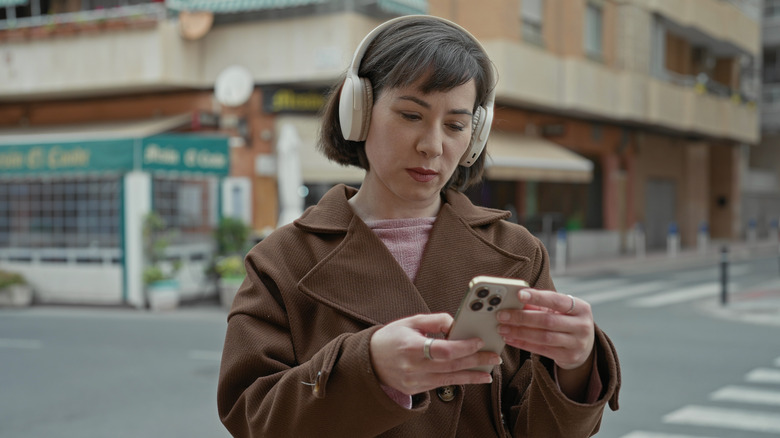
Many of the best noise-canceling headphones use active noise-canceling and let you adjust the ANC levels, usually through an app that connects to the headphones via Bluetooth. When you turn up the ANC levels, it increases the intensity of anti-noise, which can create a sensation of pressure in your ears. This ANC pressure may cause headaches, but it is reportedly not harmful to your hearing.
What can be a problem, though, is when ANC makes the user feel like they need to crank up the volume. A study published in the journal Applied Acoustics (via ScienceDirect) found that when ANC blocks out most ambient noise, the user might still perceive higher-frequency ambient noise. This makes those higher-frequency sounds more pronounced, which may prompt the listener to turn up the volume to overcome them.
Another study, conducted by Listen, Inc., highlighted that ANC can degrade perceived sound quality. If the user perceives the sound quality as lower, it’s often natural to try making it louder to increase clarity. The higher your ANC setting, the more you might feel the need to turn up the volume. Active noise canceling is not particularly harmful on its own, but constantly listening to music at full blast can cause inner ear injuries over time and damage one’s hearing.
Using active noise-cancelling when you don’t need it
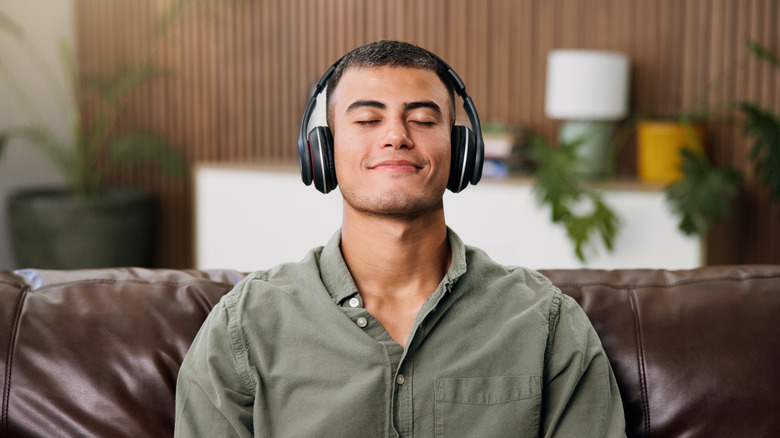
It might seem like a hassle to switch ANC on and off constantly, but you really should keep it off when you don’t need it. The good news is that there’s no indication of ANC wearing out the speaker drivers or degrading the physical longevity of your headphones. However, it does cause your headphones’ battery to drain up to 50% faster.
The average pair of rechargeable wireless headphones can go through up to 500 charge cycles before the lithium-ion battery reaches a failure point. That translates to about 3 years of regular use before you have to toss the cans. But if ANC is making you go through those charge cycles 50% faster, your headphones might lose as much as a year of life if you’re always using ANC.
Why does it suck up so much battery, anyway? When ANC is turned on, the battery powers multiple additional processes: detecting ambient noise, processing that noise in real time, and generating anti-noise, all on top of the regular functions a set of headphones is expected to provide. With so much going on, it’s easy to see why you shouldn’t buy cheap noise-canceling headphones; keeping costs low means making big compromises somewhere, and battery life is usually one of the first things to be sacrificed.
Wearing your noise-cancelling headphones all day

It might be tempting to use your nice noise-canceling cans all the time, especially if you share a living space with someone, but your headphones — and your ears — deserve a break. As with any type of headphones, excessive use increases the risk of hearing loss or ear infections.
It’s especially important to take off your noise-canceling headphones when you’re outside, but not quite for the reason you might think. Noise cancellation does not always eliminate sounds completely. You might notice that it often makes ambient noise sound muffled or further away. This noise reduction can actually be more dangerous than complete noise cancellation. If you know your headphones block all sound, you’ll be more likely to look around for hazards. But if you think you can hear something coming, you might wrongfully ignore it if it sounds farther away than it actually is.
If you still want to wear your noise-canceling headphones all the time, wherever you go, consider using transparency mode while you’re out and about. Audiophiles might debate whether transparency mode makes audio sound better than noise-canceling, but it’s more about awareness than anything else. Headphones with transparency features can pick up ambient sounds and filter them directly into your ears. This keeps you completely in touch with your surroundings, even when your favorite headphones are cranked all the way up.