Read more at:
Anyone who’s ever owned a traditional cathode ray tube (CRT) TV knows that despite their bulky size, compared to today’s flat panels, they were reliable and lasted a long time. People still have CRTs they’ve been using for years, decades even. There’s a really strong collector’s community behind them, as well. Technology and retro enthusiasts love CRT displays for games, movies, and entertainment. But why do old CRT TVs seem to last longer than modern ones? How do the lifespans compare?
It’s not your imagination. Older TVs really did last longer. The average lifespan for a CRT TV is about 15 years, with some lasting over 20 years or more. Per ResearchGate, about 20% of CRT TVs are discarded within their first five years of use, so, a good amount do fail, but it’s not common. Compare that to modern LCD and LED TVs, which sport an average lifespan of 6 years. More than 40% of modern LCD and LED panels are discarded within five years.
The lifespans are largely tied to engineering; it has a lot to do with build complexity and the quality of parts used inside the TVs. Old CRT TVs have fewer internal components with fewer failure points, so the technology is simpler. Moreover, because CRTs are larger, there’s more space to disperse heat and reduce potential wear on said components versus modern panels, which tend to generate a lot of heat in a confined space. Heat is very bad for electronics. Plus, there are thousands, maybe hundreds of thousands, of components behind modern technologies, including millions of miniscule lights, and all are potential failure points.
Beyond hardware complexity, software also plays a role
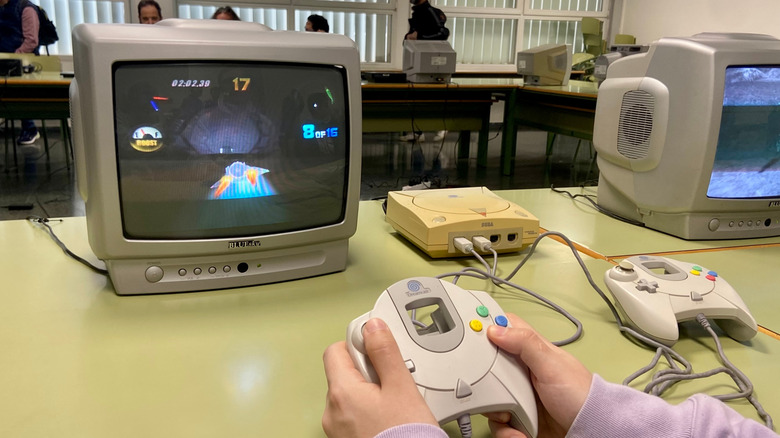
Old CRT models didn’t have the software complications that modern TVs do either. Think about the average smart TV, which needs a streaming platform with online features, multiple apps, and background services. Not only does all that have to be maintained, through software and feature updates, but it also requires additional hardware to support it, such as a more complex main circuit board with RAM, processors, and other computing tech. That’s more hardware tucked inside, more software that can go wrong, and exponentially more failure points that can bring down the entire system. It’s no wonder newer technologies have higher failure rates when there’s so much that can go wrong.
But there are also so many additional factors or elements of a TVs lifespan, from how often its used or powered on — measured in rated hours — to the environment where its installed, including exposure to hot or cold temperatures, dust, direct sunlight, and much, much more.
These same considerations still matter with CRT TVs, they matter with all electronics actually, but because older technologies have fewer components, and essentially no software considerations, the failure rates are lower. You could also argue that a lot of the modern considerations with newer panel technologies, like extended software support, make the shorter lifespans seem worse than they actually are. Software and security updates might end, but the TV still works fine as-is. The opposite side of that is a software update that makes performance worse or introduces more bugs, which happens from time to time.
CRTs are not definitively better
Sure, CRTs last longer on average, but that doesn’t necessarily make them “better” in every sense to modern TVs. The arguments in support of them are more nuanced than you might expect. CRT TVs still require specialized manufacturing processes and equipment, almost none of which still exists, and that makes repairs extremely challenging and expensive. If you own a CRT TV that needs to be repaired or serviced, good luck finding a local technician with reasonable rates. Per Retrowave, you can expect to pay between $100 and $500 for professional CRT repairs not including “specialized labor” costs or “diagnostic fees.” At those prices, it may be smarter to buy a new TV outright.
Perhaps most importantly, CRT TVs likely wouldn’t hold up to today’s environmental and safety regulations. They aren’t as power-efficient, they often contain hazardous or non-desirable materials, like lead, and the electronics components or internal systems follow outdated design principles with almost no emphasis on safety. CRTs and old TVs do indeed emit radiation, as well, though it’s not as bad as you might think. That’s where the lead glass comes into the picture.
That’s not to say you can’t enjoy them if you own one, but it does mean that comparing modern TV panels to older technologies like cathode ray is not one-to-one. If you do happen to have one sitting around, you might want to explore a few clever uses for that old CRT TV. If it still works, why not put it through its paces?