Read more at:
Anyone who has ever opened a sealed iPhone retail box will know that it’s not exactly a speedy process. You pull the seals on the back and start lifting the top in anticipation of getting your hands on the smartphone. But the lid moves incredibly slowly because the top and bottom halves fit almost perfectly. The tight tolerances make it difficult for the lid to move, and you have to wait. You could force it open, but most people probably don’t, considering surveys that say iPhone users tend to hold on to the empty retail boxes despite Apple’s advice to recycle them.
You go through the same iPhone opening experience time and time again, and that’s by design. Apple created this ritual on purpose, to build up the anticipation and give the user a premium experience. The company doesn’t routinely address its iPhone retail packaging strategy, but comments from Steve Jobs and Jony Ive over the years can help explain Apple’s intentions. Apple patents for retail boxes also show the company’s intentional approach for retail box design.
“When you open the box of an iPhone or iPad, we want that tactile experience to set the tone for how you perceive the product,” Steve Jobs said about Apple’s marketing philosophy, adding that he learned that from Apple’s first investor and chairman, Mike Markkula. These comments appeared in Walter Isaacson’s “Steve Jobs” biography.
According to RetailBrew, Jony Ive said he had spent a lot of time with Steve Jobs on packaging design. Ive made the revelations to Isaacson in interviews for the book. Ive noted his love for the unpacking process. “You design a ritual of unpacking to make the product feel special,” Ive said. “Packaging can be theater; it can create a story.”
The iPhone unboxing experience
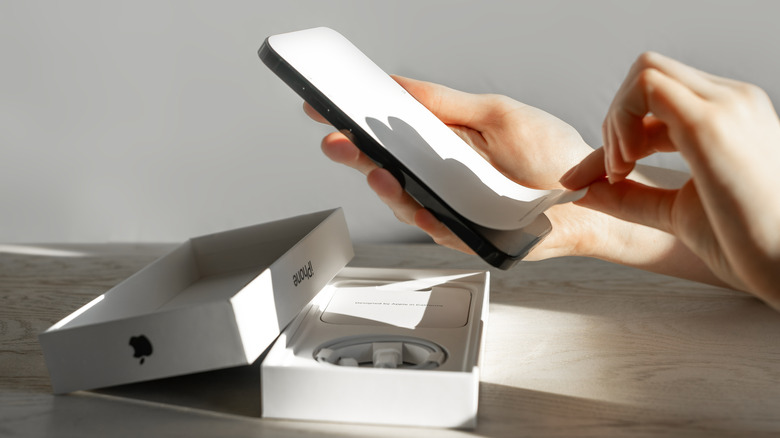
Ive didn’t mention the iPhone specifically in his remarks for Isaacson, but the iPhone has been Apple’s main product for years. The packaging has evolved since Jobs introduced the first model, but it retains the same experience for the user. RetailBrew talked to design expert Greta Dirsel from design agency Landor & Fitch about the iPhone retail box in 2023. She explained that the packaging is meant to make the user wait for the product reveal. “There is a suspense created in the time that it takes — time, the most precious commodity, we’re just used to ripping into things,” the design executive said. “It’s like, ‘Slow down. Calm down. You’re about to be transported. You’re about to be amazed.'”
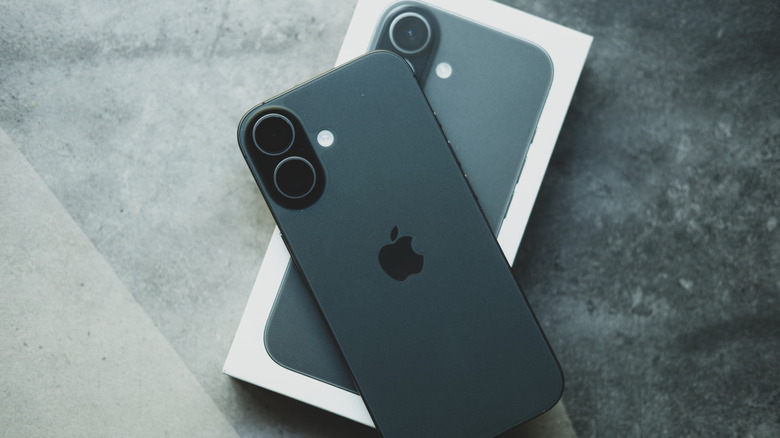
Beginning with the original iPhone model in 2007, Apple used a similar approach to retail packaging, even though the company made a big change with the iPhone 12. The box has a minimal footprint, being only slightly larger than the iPhone itself. It’s made of rigid cardboard, as the box still has to offer strong protection, but otherwise has a minimal design. It’s black or white, with the top showing an image of the product inside. On the sides, the product name appears, while more details about the iPhone are printed on the back, alongside the various regulatory markings.
The iPhone display, protected by a sheet of paper, is the first thing that appears once the lid finally comes off. This is the product the buyer wants, and Apple makes it accessible right away, after that anticipation period during the opening process. Under the iPhone, there is a separate compartment that contains the accessories.
How the iPhone retail box has evolved over the years
In a chat with Stripe in 2025, Jony Ive talked about his deliberate work on designing detailed iPhone unboxing experiences for the user. He mentioned the charging cable and its packaging within the box, saying there was something “spiritual” about that user experience for him, as the designer. “I believe that when somebody unwrapped that box and took out that cable, and they thought, ‘Somebody gave a s*** about me,’ I think that’s a spiritual thing,” he said. In 2020, the charging cable was the only accessory left in the iPhone box.
Apple removed the power adapter and EarPods from the iPhone 12 box, citing environmental concerns. This allowed Apple to shrink the size of the box and to ship 70% more boxes per pallet than before. Apple also said that the smaller retail box allowed it to avoid 2 million metric tons of carbon emissions per year, which was the equivalent of removing 450,000 cars from roads. This had a practical impact on the iPhone box opening experience. The box shrank, so lifting the lid didn’t take as much time as before, though the experience did not change significantly. Buyers still had to wait to get their hands on the iPhone in the box.
Apple continued optimizing the iPhone retail box in the following years, without changing its design. The iPhone 13 series removed the plastic wrap from the box. In 2024, the iPhone 16 packaging was made of 100% fiber, which included 64% recycled content. The packaging volume was 8% lower than the iPhone 15 retail box that preceded it. But despite the changes, Apple preserved the retail box opening ritual and the difficulty that comes with it.